Bio-uptake of metalloids by plants
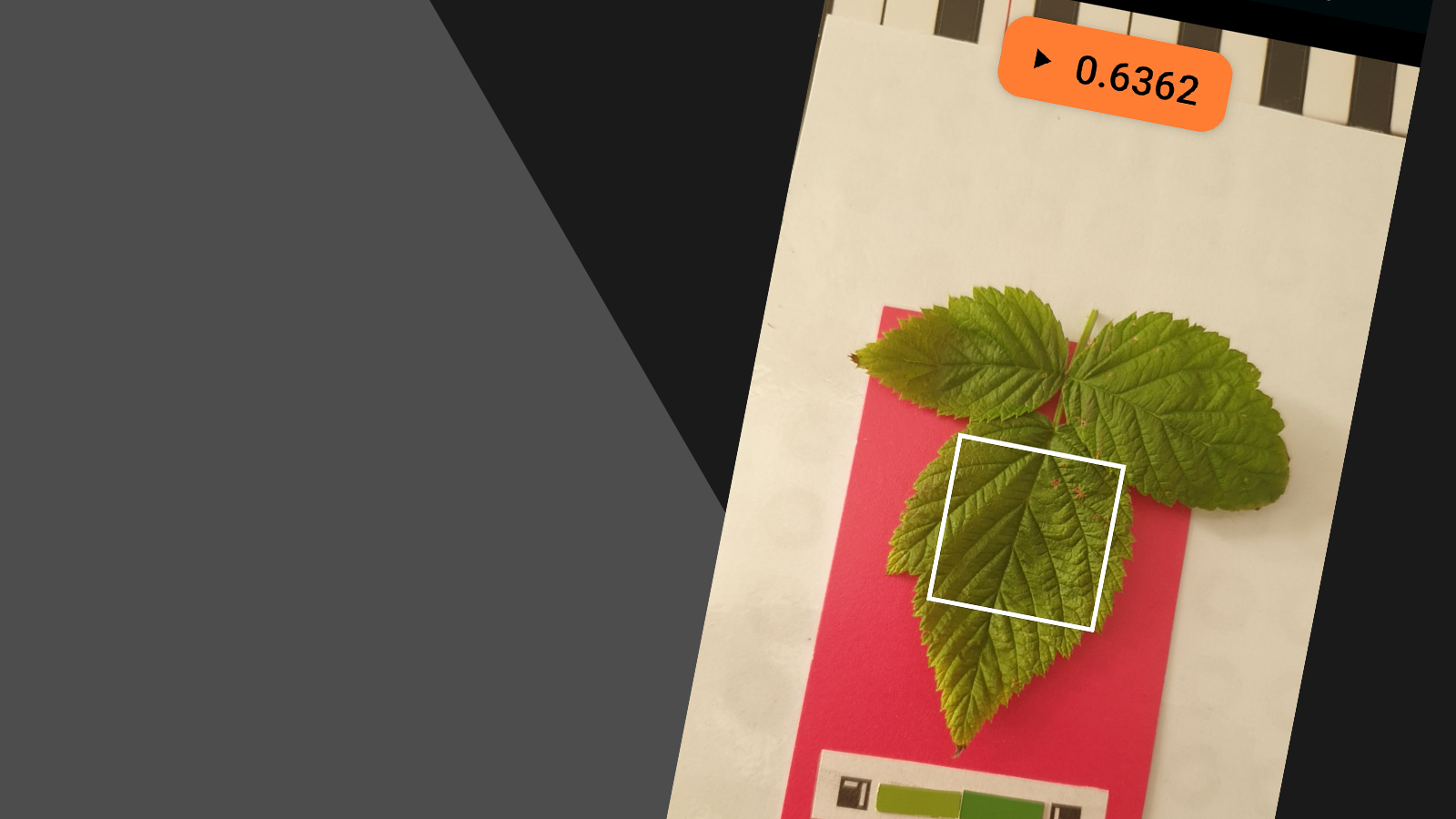
Mobile application Petiole App has helped in measurement of leaf area for the research, carried at the University of Liverpool, UK.
By Maryna Kuzmenko
Today we are delighted to discuss in more details how the mobile application Petiole helped a researcher Dennis Tuyogon from the University of Liverpool in the United Kingdom. In 2021 he has successfully defended his PhD thesis “Bio-uptake of metalloids (inorganic antimony and arsenic) by plants and development of electroanalytical methods for antimony detection and speciation”. Importantly, Dennis used Petiole algorithm for leaf area measurement.
Why the topic of bio-uptake of metalloids by plants is important?
It is a well known fact that metals and metalloid ions are a natural part of our planet and play important role in existence of life on Earth. In fact, they are present in the diverse layers that compose it.
However, when their levels are found in high concentrations, then it may result in toxicity for many of its life forms, for example, microorganisms, plants, animals, and humans.
Metalloids are naturally present in the environment. At the same time, human activity has largely contributed to their liberation from these natural sources, causing contamination of soils, rivers, oceans, and the atmosphere.
Extract of the Abstract
Background
Metalloids like arsenic (As) and antimony (Sb) are naturally present at low concentrations but the increased use of these metalloids in the environment has led to environmental soil and groundwater contamination issues and understanding their biogeochemical cycling is of prime importance to predict potential contamination issues.
Despite its toxicity, Sb received little analytical attention compared to other toxic heavy metals. However, speciation analysis is necessary to understand the toxicity and fate of each metalloid species in the environment.
The speciation of metalloids is however often limited to the differentiation of oxidation states and identification of stable organic species by techniques such as ICP and LC-MS.
Key suggestions
The detection and identification of more reactive, relatively weak complexes that can play a preponderant role in the transport of these elements are however much less known. There is a wide range of available spectroscopic techniques for total Sb and As determination and speciation in real environmental samples. But the equipment often used for such analysis is bulky, expensive, and immobile.
The necessity for a cheap, portable, smaller, and simpler analytical technique that can be used in the field were all the reasons for using electrochemical methods.
One of the techniques is by using a gold microwire electrode that is well suited for the speciation of inorganic arsenic and antimony that has the advantage of low cost, portability, and may detect weak complex.
Main focus of the study
The main focus of this study is trying to understand where metalloid species are ending up and how they are being transported. This thesis investigated the bio-uptake of metalloids (inorganic antimony and arsenic) by plants and the development of electroanalytical methods for antimony detection and speciation.
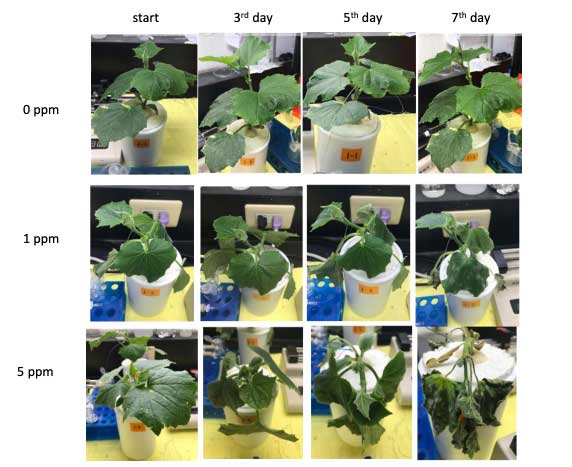
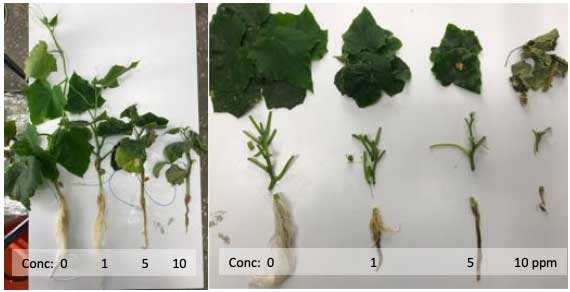
Bio-uptake of metalloids were using a hydroponic experiment of cucumber plant chosen as a model plant to assess the impact of As or Sb species, plant age, exposure duration, and metalloid concentration to overall plant morphology. A new method of microdialysis was developed. Being less destructive and less invasive, it can be a useful tool for xylem sap sampling allowing researchers to simulate nutrient/toxic metal uptake, translocation, and absorption while taking into consideration the effect of transpiration.
The other aim of this study is to use voltammetry to study the complexation of such elements with e.g. carboxylic acids, preponderant components of xylem sap that might strongly affect the translocation of As and Sb.
Outcome
Voltammetric methods were developed for (1) complexation studies of Sb(III) with xylem sap samples and determination of stability constants of Sb(III) with low molecular weight ligands and cation mediated reduction of Sb(V) using monovalent, divalent, and trivalent cations.
We have demonstrated the feasibility to quantitatively study the complexation of the presence of Sb(III) complex with low molecular weight ligands, specifically EDTA, DTPA, TA, and GSH using a voltammetric method (pseudopolarography on Au electrode) at ppb levels.
The technique may also be that will be used to gain insights into the complexation patterns of inorganic and organic bound Sb and highlight the formation of weak, fast dissociating species as well as inert, stable, complexes. Voltammetry may complement nicely the commonly that will be used chromatographic and hyphenated techniques.
How does mobile application Petiole help to research bio-uptake of metalloids by plants?
It is a huge honour for Petiole – our mobile application was the key tool for Mr. Tuyogon in his research of bio-uptake of metalloids by plants, in particularly, cucumbers.
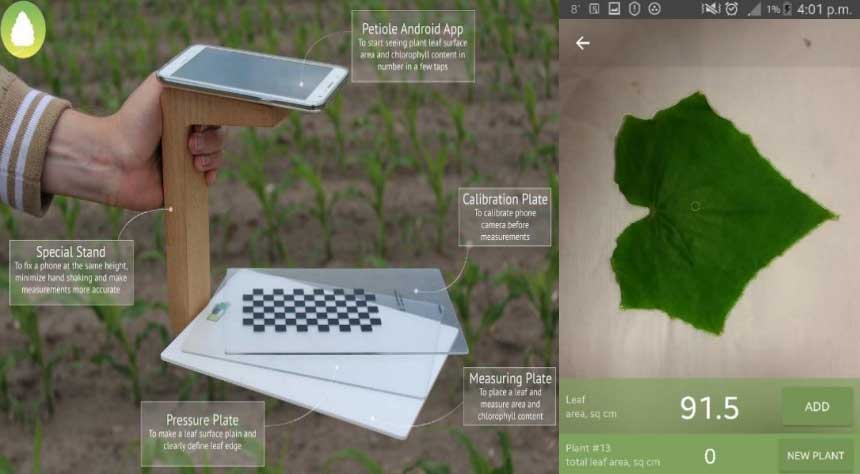
Quotation form the page 30 of the dissertation:
2.3.7.2 Leaf Area (Digital Image Analysis Method)
Digital images of 10 randomly selected leaves per treatment were taken against a white background in a well-lighted room using an android smartphone and petiole application (https://petioleapp.com/)(Hrytsak et al., 2018; Polunina et al., 2018). It was calibrated every ten readings using the downloaded calibration pads for different leaf size range (i.e., 8, 11, 15, and 20 cm). A modified stand was made for the analysis based on the suggested set-up by the petiole application website shown in figure 2.6.
Tuyogon, Dennis (2021) Bio-uptake of metalloids (inorganic antimony and arsenic) by plants and development of electroanalytical methods for antimony detection and speciation
Credentials of the publication
| Item Type: | Thesis (Doctor of Philosophy) |
|---|---|
| Divisions: | Faculty of Science and Engineering > School of Environmental Sciences |
| Institution: | University of Liverpool |
| Date Deposited: | 25 Jun 2021 15:33 |
| Country: | United Kingdom |
| DOI: | 10.17638/03126577 |
| Supervisors: | Salaun, PascalWolff, GeorgeFeldmann, JorgWang, Chu-Fang |
| URI: | https://livrepository.liverpool.ac.uk/id/eprint/3126577 |
This scientific publication is listed on the full list of research papers, where scientists use mobile applications Petiole App and Petiole Pro for their plant research.